Tools for Mixing Concrete: How to Choose the Right One
Concrete is one of the most common materials in construction. You see it everywhere: in sidewalks, driveways, foundations and tall buildings. It’s versatile and affordable. But the mix has to be right if you want lasting strength. The tool you choose for mixing also affects quality, efficiency and safety. This guide walks you through the main mixing tools, their advantages and how to pick the best one for your project.
Why Does the Right Mixing Tool Matter?
Mixing concrete may sound straightforward, but the wrong approach can cause weak batches, wasted material or slowdowns. The right tool helps achieve a uniform mix, saves labor and keeps crews safe. Consider job size, location and type of work when choosing between hand tools, portable mixers or heavy-duty equipment.
Buckets and Wheelbarrows
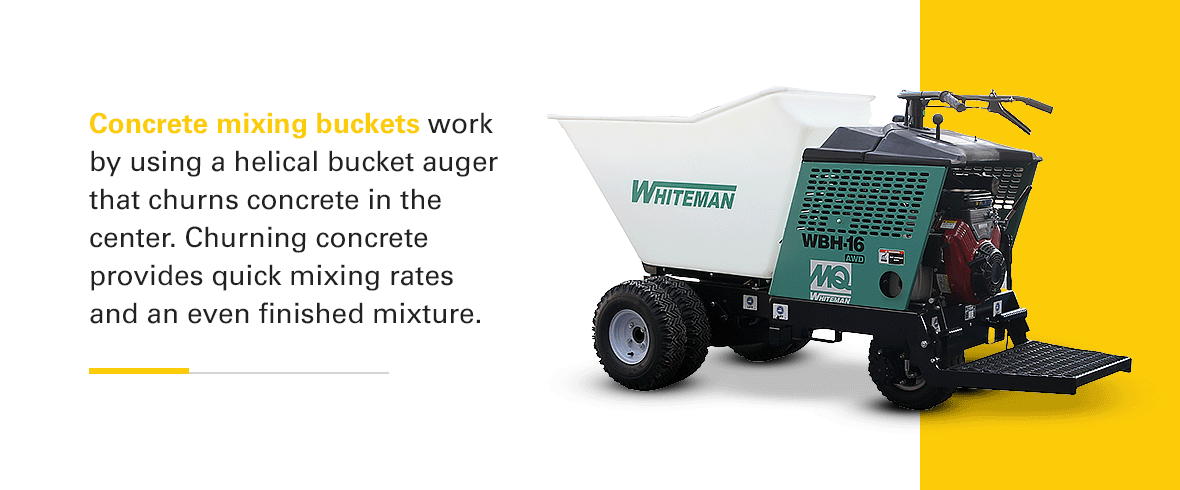
For very small projects like patching or minor repairs, a concrete bucket and mixing hoe or a wheelbarrow with a shovel can be enough. This low-cost method works best when you only need a small batch of concrete.
Pros:
- Simple, no power required
- Low cost and easy to transport
- Good for DIY or small patch work
Limitations:
- Labor-intensive and tiring for crews
- Hard to maintain consistency in large batches
- Not practical for medium or large jobs
Portable Concrete Mixers
Portable drum mixers, powered by electricity or gas, are the most common option for small to mid-size jobs. They spin the mix continuously, producing uniform batches with less effort.
Pros:
- Mixes larger batches than buckets or wheelbarrows
- Keeps concrete uniform with rotating drum
- Portable and easy to move around jobsites
Limitations:
- Still limited in batch size
- Requires fuel or electrical hookup
- Cleaning essential between mixes to prevent buildup
Mixing Drills With Paddles
Heavy-duty electric drills with paddle attachments are useful for mortar, grout, or smaller concrete projects. They’re lightweight compared to drum mixers and allow crews to mix directly in buckets.
Pros:
- Compact and easy to use indoors
- Good for smaller batches of mortar, plaster or grout
- Less cleanup compared to larger mixers
Limitations:
- Not suited for large volumes of concrete
- Requires power and durable mixing paddles
- Operator fatigue from holding the drill for long periods
Concrete Buggies
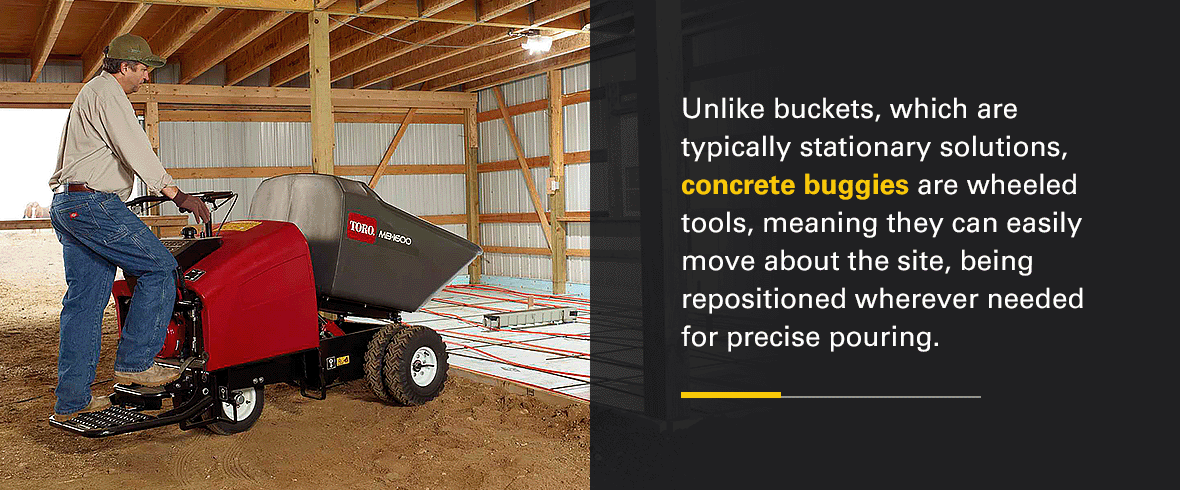
Concrete buggies, also called power buggies, are designed to move mixed concrete across jobsites quickly. They’re not for mixing but complement mixers by transporting large volumes efficiently.
Pros:
- Move heavy loads with less labor
- Increase productivity on large sites
- Reduce spills and safety risks when moving concrete
Limitations:
- Not for mixing, only transport
- Require space to maneuver safely
- More expensive than manual wheelbarrows
Mortar Mixers vs. Concrete Mixers
At first glance, mortar mixers and concrete mixers look similar, but they are built for different applications. Mortar mixers use paddles to fold material into smooth blends without aggregate. Concrete mixers tumble aggregate, cement and water together for stronger mixes.
Mortar mixers are common on masonry jobs where bricklaying or stucco work requires smooth mortar. Concrete mixers are better for sidewalks, driveways and structural foundations. Knowing which tool to use prevents wasted material and ensures the mix performs as expected.
Concrete Vibrators and Finishing Tools
Once mixed and poured, concrete still needs attention. Air pockets trapped in the mix can weaken the final product. Concrete vibrators solve this by consolidating the mix and removing voids. Finishing tools like trowels, floats and screeds then smooth the surface, improving durability and appearance.
On decorative projects such as patios or stamped concrete, these finishing tools are essential. They ensure the surface looks professional and performs well against wear and weather.
Concrete Vibrators and Finishing Tools
Once mixed and poured, concrete still needs attention. Air pockets trapped in the mix can weaken the final product. Concrete vibrators solve this by consolidating the mix and removing voids. Finishing tools like trowels, floats and screeds then smooth the surface, improving durability and appearance.
On decorative projects such as patios or stamped concrete, these finishing tools are essential. They ensure the surface looks professional and performs well against wear and weather.
Dumpers and Large-Scale Equipment
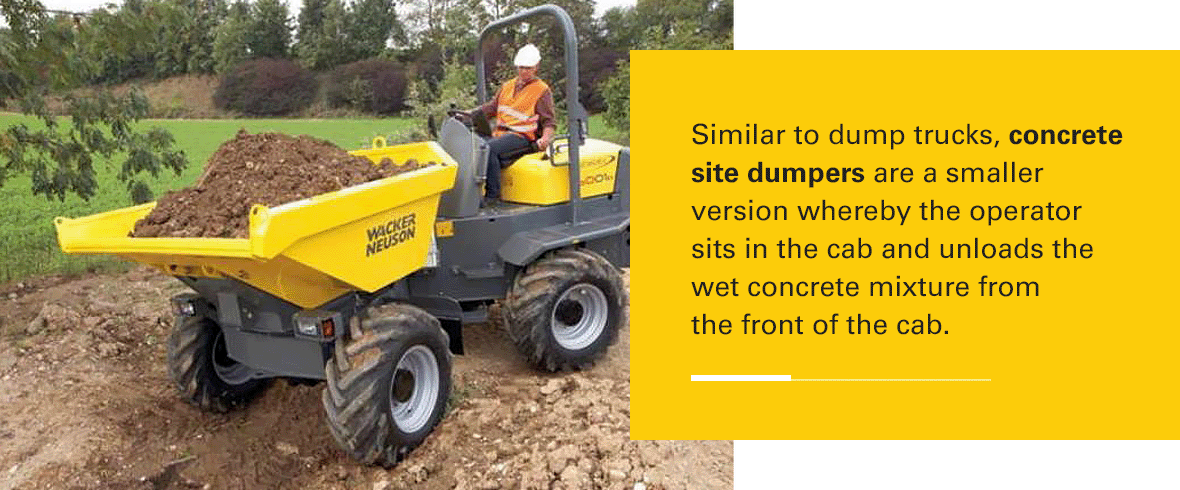
For high-volume jobs like commercial slabs or infrastructure, dumpers and large drum mixers deliver the capacity needed. These machines produce and move big batches, supporting continuous pours without delays.
Pros:
- Mix and move large volumes efficiently
- Reduce downtime during large pours
- Match well with concrete pumps for major projects
Limitations:
- High cost and maintenance requirements
- Need skilled operators and safety protocols
How Do You Choose the Right Mixing Tool?
Key factors include:
- Project size and timeline
- Type of mix – concrete vs. mortar
- Jobsite conditions, like power access or space constraints
- Labor availability and crew size
- Budget and rental costs
Small repairs may only need a bucket or mixing drill. Medium jobs often call for portable mixers. Large commercial projects benefit from mortar mixers, concrete buggies or dumpers. The right choice balances efficiency, cost and quality.
Concrete Mixing FAQs
What’s the difference between a mortar mixer and a concrete mixer?
A mortar mixer folds material with paddles for smooth mixes. A concrete mixer tumbles aggregates in a drum for rougher, stronger mixes.
What tools are best for small concrete jobs?
Buckets, wheelbarrows or mixing drills work well for patching or repairs. For medium jobs, portable mixers provide consistency without heavy equipment.
Can I rent concrete mixing tools short-term?
Yes. Rental is a flexible way to access mixers, buggies and finishing tools for as long as you need them without ownership costs.
Rent Concrete Mixing Tools From The Cat® Rental Store
The Cat® Rental Store offers a wide range of concrete mixing tools to match any job size. You can browse our rental equipment or find the Cat Rental store near you.
Find The Cat Rental Store Near You